Posts

Showing posts with the label SDOH

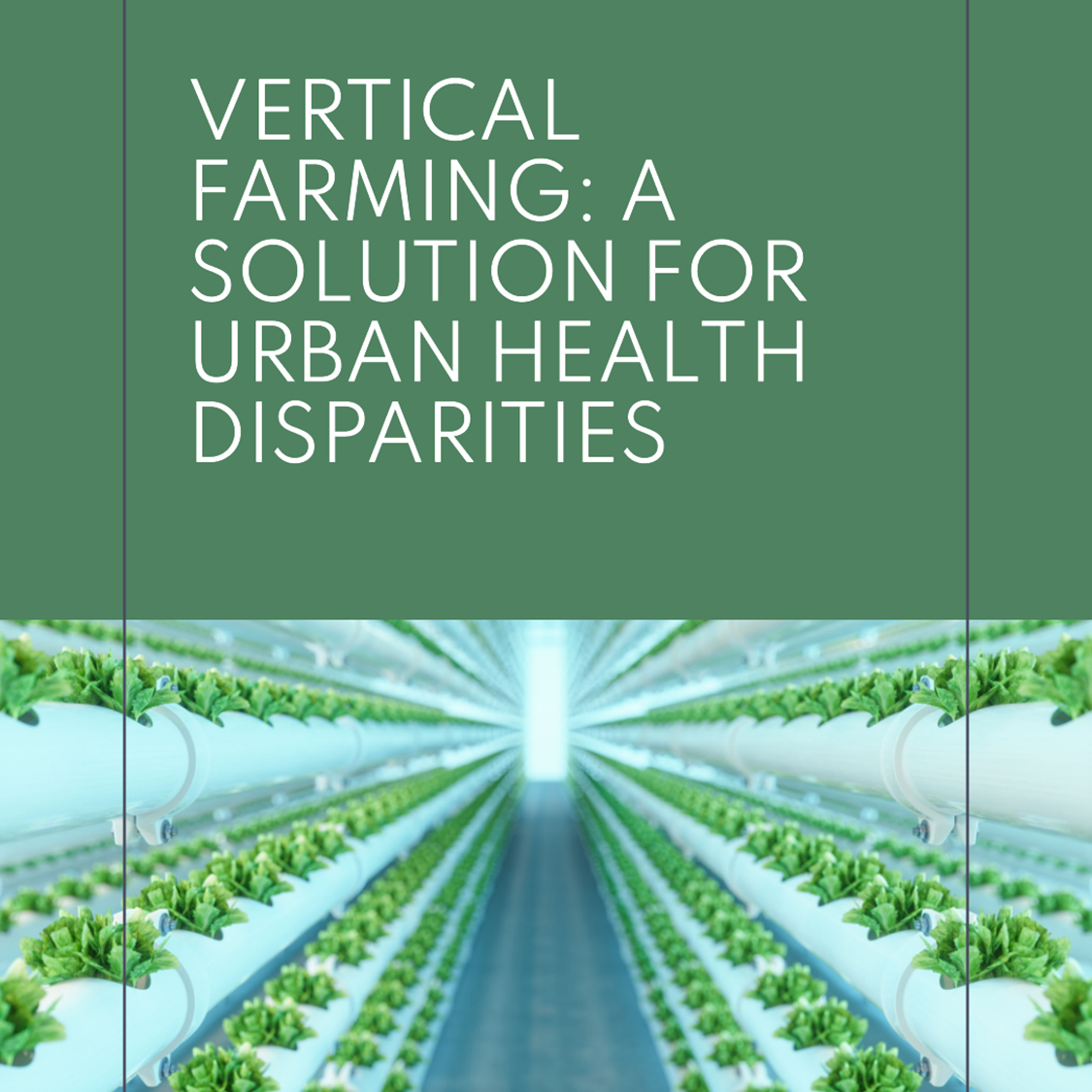
Mitigating Social Determinants of Health through Vertical Farming in Urban Areas
Image
Mitigating Social Determinants of Health through Vertical Farming in Urban Areas "Food is the problem and the solution. By changing what we eat, we not only influence our health but also the health of our planet."   — Dr. Mark Hyman Editorial By Brian J. Stowell    November 13, 2023 Vertical farming is transforming the way we approach agriculture. Vertical farming involves growing crops in stacked layers in a controlled environment, similar to a skyscraper. This innovative technique offers numerous benefits that can significantly impact health and social issues in urban areas. By bringing farming into cities, vertical farming can address food insecurity, promote healthier diets, create job opportunities, and contribute to more equitable and resilient urban communities. It is crucial to consider social determinants of health (SDOH) when assessing health outcomes. SDOH are the conditions where people are born, live, learn, work, play, and age, impacting a wide range of heal...

Can We Drive Innovation to Bridge the Gap between Social Determinants of Health and Health Equity?

Image
Can We Drive Innovation to Bridge the Gap between Social Determinants of Health and Health Equity? “If access to health care is considered a human right, who is considered human enough to have that right?”  - Paul Farmer In the ever-evolving healthcare landscape, this poignant question resonates with me. As a healthcare consultant specializing in organizational strategy and business development, I frequently find myself at the intersection of health equity, social determinants of health (SDOH), and primary care innovation. This intersection holds the key to transforming our healthcare system. The symbiotic relationship between SDOH and health equity is undeniable, as both significantly influence patient outcomes and overall healthcare costs. However, a critical bridge between these factors and primary care innovation still needs to be completed, posing a hurdle in our journey towards an equitable healthcare system. In a value-based care environment, it becomes increasingly essentia...

Reframing Chronic Care: Unveiling the Potential of Social Determinants and Patient Data

Image
Reframing Chronic Care: Unveiling the Potential of Social Determinants and Patient Data “The greatest opportunity to improve health and reduce premature deaths lies in personal behavior... In many cases, the most effective health interventions involve modifying behavior, changing the context to make individuals’ default decisions healthy, and providing preventive care.”  -  Robert M. Kaplan, Former Chief Science Officer, US Agency for Healthcare Research and Quality The rapidly evolving healthcare landscape has brought to light an intriguing and increasingly recognized concept: the social determinants of health (SDOH). SDOH are conditions in the environments where people live, learn, work, and play that affect various health, functioning, and quality-of-life outcomes and risks. Identifying and managing chronic diseases in older adults is crucial, and they play a significant role in this process. With the growing importance of patient-generated data (PGD), healthcare providers ...

Bridging the Gap: Health Equity and the Promise of HEOR and RWE

Image
"Health is a state of complete physical, mental, and social well-being and not merely the absence of disease or infirmity."  - World Health Organization The Health Equity Imperative A stark reality was exposed during the COVID-19 pandemic – deep-seated healthcare disparities that predominantly impact communities marginalized by race, income, gender, and geography. But could this crisis also provide us a roadmap to fostering health equity? Can tools within the pharmaceutical industry like Health Economics and Outcomes Research (HEOR) and Real World Evidence (RWE) hold the keys to addressing these disparities? The Current Landscape: A Divide Laid Bare Consider Mary, a single mother of three living in a low-income neighborhood. She's juggling two jobs and trying to keep her family safe during a global pandemic. Telemedicine could provide an excellent resource for Mary, but poor internet connectivity and limited technological literacy prove to be insurmountable barriers. How ...